
Stopping the Shadow Empire: Exposing the Executive Building a Parallel Business
You trust your top executives. Their loyalty and expertise drive your company. But what if those strengths hide a secret operation? This case shows how two leaders built a hidden empire using company knowledge, fake ventures, and laundering networks. Insider threats now extend beyond data theft to entire parallel businesses. Standard checks miss this. Insight Intel uncovers hidden networks, analyzes OSINT data, and identifies risks before damage occurs. The real threat may be inside your walls.
Stopping the Shadow Empire: Exposing the Executive Building a Parallel Business
You trust your top executives. Their loyalty and expertise drive your company. But what if those strengths hide a secret operation? This case shows how two leaders built a hidden empire using company knowledge, fake ventures, and laundering networks. Insider threats now extend beyond data theft to entire parallel businesses. Standard checks miss this. Insight Intel uncovers hidden networks, analyzes OSINT data, and identifies risks before damage occurs. The real threat may be inside your walls.
Stopping the Shadow Empire: Exposing the Executive Building a Parallel Business
You trust your top people. It’s a given, right? Your VPs, your senior directors, the ones who have been in the trenches, the ones with institutional knowledge baked into their brains. They have the skills, the experience, and your complete confidence. But what if that expertise, the very thing you value most, was being meticulously applied to a project you know nothing about?
What if they were building a shadow empire right under your nose?
This isn’t a movie plot. It’s a real and growing risk in the corporate world, where the lines between a side-hustle and a sophisticated criminal enterprise can get terrifyingly blurry. The following account is drawn from the facts of a live, ongoing investigation. While the names have been changed to protect the integrity of the process, the events are real, and the threat is immediate. This breakdown of two executives, we’ll call them Entity 1 and Entity 2, isn’t a hypothetical case study; it’s a chilling, real-world example of how the game has changed.

Meet the A-Team with a Secret
On paper, Entity 1 and Entity 2 were the gold standard. They spent the better part of two decades as senior figures at a major, publicly-traded IT firm. Entity 1 was the CRM guru, a master of managing customer relationships and the complex systems that drive them. Entity 2 was the financial architect, a director who understood the back-end of enterprise applications and how money moved through sprawling corporate structures. They were credible, distinguished, and exactly the kind of talent you’d want on your team.
So, when they left to launch their own boutique consultancy, nobody batted an eye. It’s the classic career progression. Two experts striking out on their own, leveraging their hard-won skills in the same niche B2B space they already dominated. Everything looked perfectly normal.
But it wasn’t. Honestly, it wasn’t even close.

So, What’s the First Crack in the Facade?
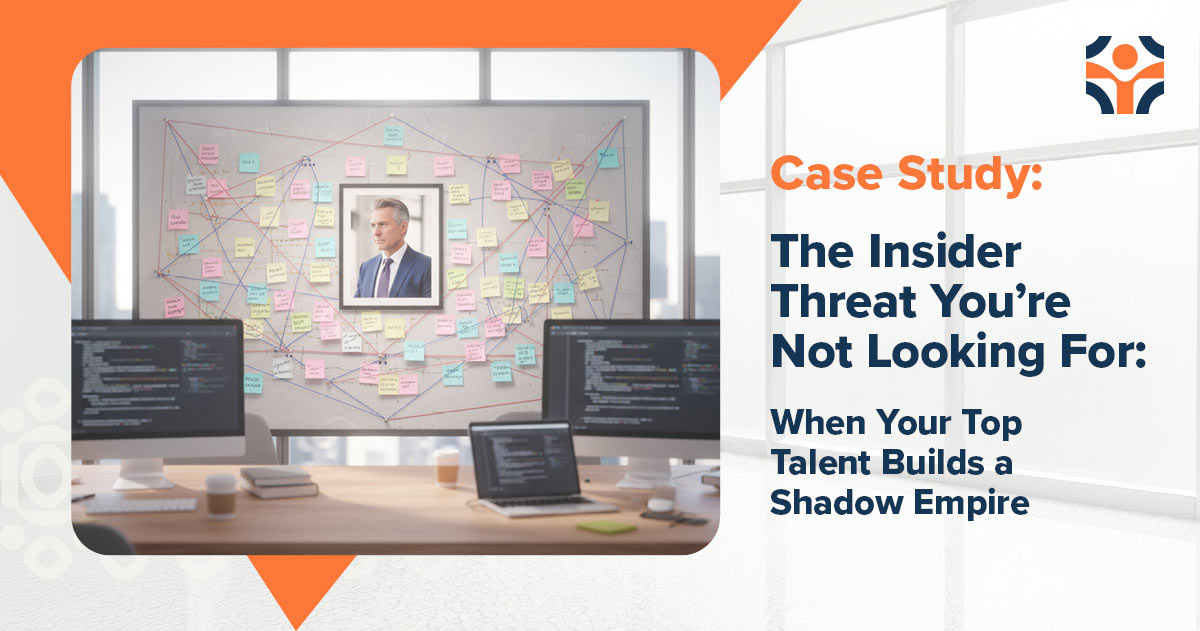
The first sign that something was off wasn’t a loud bang; it was a quiet, almost imperceptible click. On February 15, 2023*, two new companies were registered. One by Entity 1, and one by Entity 2.
They were registered on the exact same day, with an identical naming convention. Coincidence? Highly unlikely. This was a deliberate, synchronised move. This was the birth of their covert alliance.
Here’s the thing. These weren’t active businesses. They had no websites, no listed phone numbers, no public presence whatsoever. In the intelligence world, these are called “sleeper” entities. You create them to lie dormant, clean and unused, until you need a corporate vehicle for a purpose you don’t want associated with your public-facing identity. It’s the corporate equivalent of buying a burner phone. You have to ask, why would two successful consultants need burner companies?
Following the Digital Breadcrumbs into the Dark
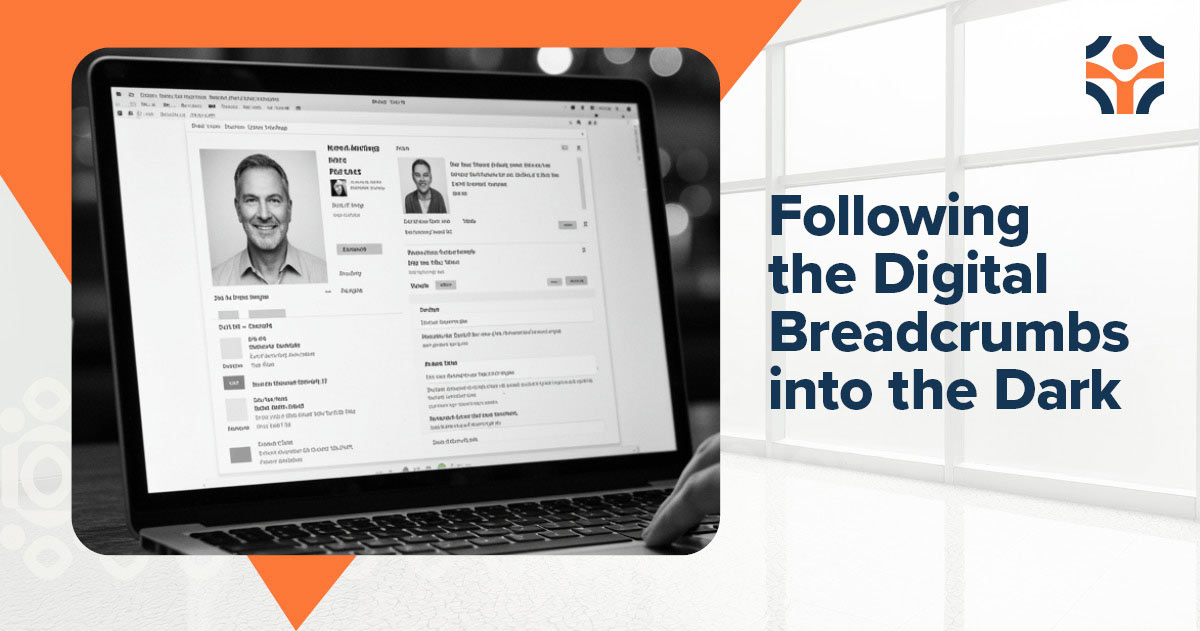
A traditional due diligence check might stop there, flagging the sleeper companies as an oddity. But the real story is rarely on the surface. When you dig into their digital footprints, the picture gets much, much darker.
Entity 1 and Entity 2 weren’t just exploring new business ventures; they were actively engaging with the seedy underbelly of online financial scams. Their personal data—names, emails, phone numbers—popped up in a series of data breaches. But these weren’t from your average retail company leak. Their information was found in databases like:
- “7m Forex Leads”: This isn’t just a list of people interested in finance. It’s a curated database of potential victims, bought and sold by boiler-room operations to target with high-pressure investment scams. The fact that both partners appeared in the same specialised list strongly suggests a coordinated effort to get their hands on the raw materials for fraud.
- UTIP Technologies: This company provides “Broker-in-a-Box” software. You know what? You could call it “Scam-in-a-Box.” It’s a turnkey solution for quickly setting up an unregulated online brokerage, often with features that allow the operator to manipulate trades and prevent clients from withdrawing funds.
Let me be clear. They weren’t just being curious. They were shopping for the tools of the trade. The CRM skills of Entity 1 are perfect for managing the front-end of a high-volume scam, and the financial background of Entity 2 is ideal for building the back-end architecture to handle the money. They were planning to weaponize their corporate skills.

It’s Not Just One Scheme. It’s an Ecosystem.
This is where the story goes from a simple scam to a masterclass in criminal architecture. The real danger wasn’t just the fraudulent brokerage they were planning. It was the sophisticated financial “laundromat” they built to support it.
The sleeper companies were just the start. Over the next two years, a network of seemingly unrelated businesses was established:
- The Cash Funnel: A wellness spa registered by a family member. This is a classic money-laundering vehicle. Wellness centers are cash-intensive businesses, making it easy to mix dirty money from the brokerage scam with legitimate revenue. You just overstate the cash earnings, deposit the illicit funds, and—poof—the money is “placed” into the legitimate financial system, clean as a whistle.
- The Tax Shield: A farming operation. This entity is perfectly positioned to exploit the complex and often generous tax laws available to agricultural operations in certain jurisdictions. Illicit profits can be funneled in and then offset by inflated or completely fabricated “capital expenses,” effectively making the money disappear from the taxman’s view.
- The Hard Asset: A real estate firm. This is the final step. It allows them to convert the laundered, tax-free cash into a stable, appreciating asset like property, obscuring ownership and solidifying their gains.
This isn’t diversification; it’s a meticulously designed, three-stage process for cleaning dirty money. The brokerage is the factory, the wellness spa is the storefront, and the farming and property companies are the offshore bank account.

Your Due Diligence Checklist Is Dangerously Outdated
The story of Entity 1 and Entity 2 is a stark warning. The people with the deepest knowledge of your systems are also the ones best equipped to build schemes that are almost invisible to standard checks. So, the question isn’t just “What can you do?” but “Who can see what you’re missing?”
Your old-school background check is no longer enough. For high-stakes recruitment, joint ventures, or mergers, you need to go deeper. This is where Insight Intel provides the critical advantage. We operate on the principle that what you don’t know can and will hurt you.
Instead of a checklist, we provide a comprehensive intelligence picture:
- We Look for Networks, Not Just Names: Don’t just vet the individual. At Insight Intel, we map out their entire corporate network. We identify the opaque, inactive companies and the seemingly unrelated businesses registered by family members. We connect the dots that others don’t even know exist, turning red flags into a clear, actionable map of potential collusion.
- We Analyse the Deep Digital Footprint: It’s not about a LinkedIn profile; it’s about the hidden digital life that reveals true intent. Our open-source intelligence (OSINT) expertise uncovers connections to high-risk platforms, data breaches linked to fraud, and forum activities that are wildly out of sync with a professional profile. This isn’t just data; it’s evidence of intent.
- We Assess and Quantify “Contagion Risk”: We think about the potential reputational damage to your brand before it happens. What is the risk of a headline reading, “Publicly-Traded Firm’s Top Execs Used Stolen IP to Build Criminal Enterprise”? Insight Intel provides a clear-eyed assessment of this “contagion risk,” giving you the foresight to protect shareholder confidence and avoid devastating regulatory scrutiny.
The truth is, the most dangerous threats often don’t come from shadowy external hackers. They come from the trusted insiders who walk your halls. The question you have to ask yourself isn’t just “do I trust my team?” but “are my due diligence methods capable of seeing what they might be building in the shadows?”
With Insight Intel, you’ll have the vision to find out.