
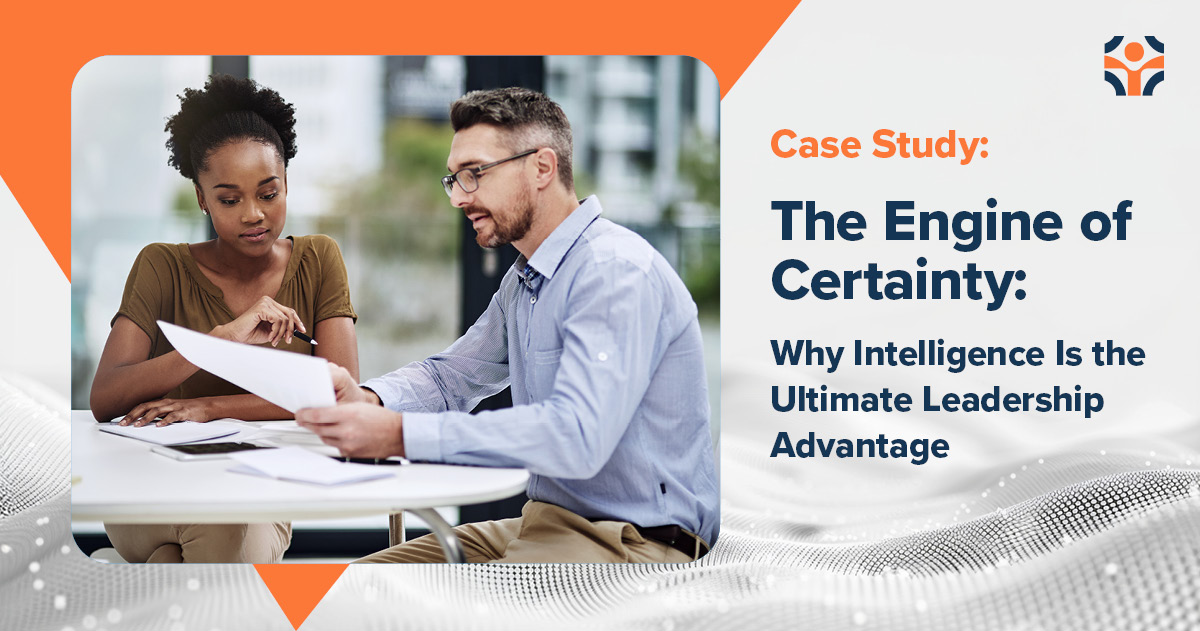
The Engine of Certainty: Why Intelligence Is the Ultimate Leadership Advantage
In high stakes business decisions, a standard background check is rarely enough. Strategic intelligence helps business leaders uncover hidden affiliations, reputational risks, and networked relationships before they affect partnerships, leadership appointments, or investments. By combining open source intelligence with experienced analysis, organisations can move beyond compliance and gain the clarity needed to make confident strategic decisions.
The Engine of Certainty: Why Intelligence Is the Ultimate Leadership Advantage
In high stakes business decisions, a standard background check is rarely enough. Strategic intelligence helps business leaders uncover hidden affiliations, reputational risks, and networked relationships before they affect partnerships, leadership appointments, or investments. By combining open source intelligence with experienced analysis, organisations can move beyond compliance and gain the clarity needed to make confident strategic decisions.
The Engine of Certainty: Why Intelligence Is the Ultimate Leadership Advantage
In the modern boardroom, the most expensive phrase any executive can utter is simple. “We didn’t know.”
For business leaders responsible for growth, partnerships, acquisitions, and strategic hiring, uncertainty carries a measurable cost. A poorly vetted executive appointment can destabilise leadership. A hidden shareholder can complicate litigation. A seemingly credible joint venture partner may introduce reputational exposure that only surfaces long after contracts are signed.
While the digital age has produced an abundance of data, genuine insight remains rare. Many organisations rely on automated background checks and compliance driven verification tools that scan for red flags in public records. These tools serve a purpose, but they rarely provide the depth of understanding required for high value commercial decisions.
In high stakes business environments, a “green light” from an algorithm often offers little more than a false sense of security.
Forward thinking organisations are therefore shifting toward a more disciplined approach. They are incorporating strategic intelligence into their decision making process to gain clarity before commitments are made.
Beyond the Surface: What Strategic Intelligence Really Means
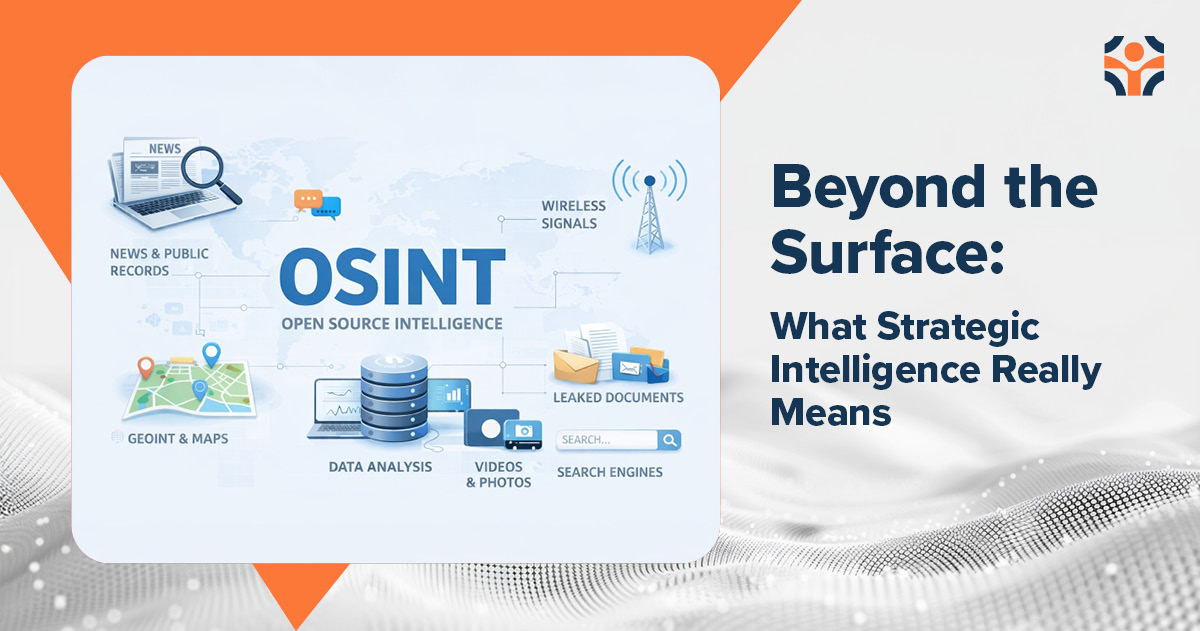
Open Source Intelligence, commonly referred to as OSINT, involves the structured analysis of publicly available information to uncover patterns, relationships, and risks that are not immediately visible.
This information exists across a wide range of digital environments. It can include corporate registries, global litigation databases, archived media records, domain ownership histories, procurement disclosures, digital footprints, and complex social or business linkages.
However, the real value of intelligence is not the collection of data itself. It is the interpretation of that data.
Many organisations accumulate vast volumes of information but struggle to translate it into meaningful guidance. Strategic intelligence bridges that gap by turning scattered digital signals into coherent insight that supports confident leadership decisions.
For business owners, this means having clarity before entering a partnership, appointing a senior executive, committing capital to a joint venture, or expanding into a new market.
Instead of reacting to risk after it materialises, strategic intelligence provides the foresight required to prevent costly missteps before they occur.
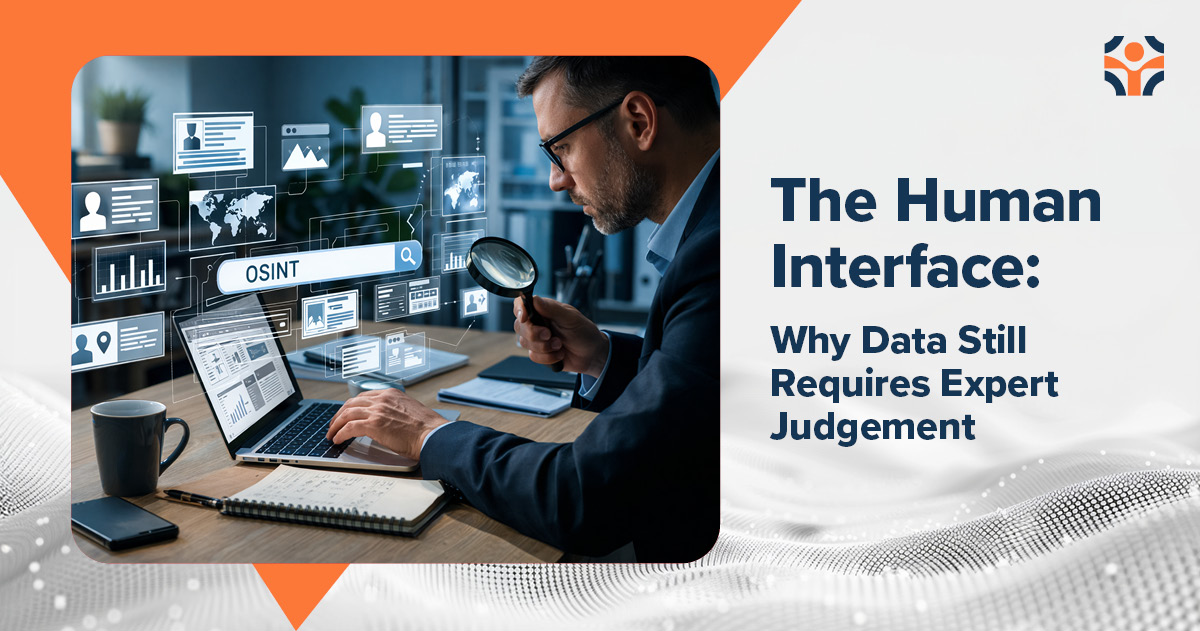
The Human Interface: Why Data Still Requires Expert Judgement
Technology plays an important role in modern intelligence gathering. Automated tools can scan databases, identify connections, and process large datasets quickly. Yet technology alone cannot interpret context.
Algorithms can flag a name in a registry or identify a shared address between companies. What they cannot do is understand the implications of that relationship within a specific commercial environment.
Human led analysis remains essential.
Experienced intelligence specialists examine patterns that automated systems often overlook. They assess behavioural indicators, historical affiliations, reputational signals, and network structures to determine whether a risk is meaningful or merely incidental.
For example, a background check may confirm that a prospective executive has no criminal record. However, deeper intelligence analysis may reveal historical associations with controversial partners, repeated involvement in failed ventures, or subtle reputational signals emerging across online networks.
Without expert interpretation, these patterns remain hidden within the noise of raw data.
By combining advanced analytical tools with human judgement, intelligence professionals transform scattered information into concise leadership briefings that support decisive action.
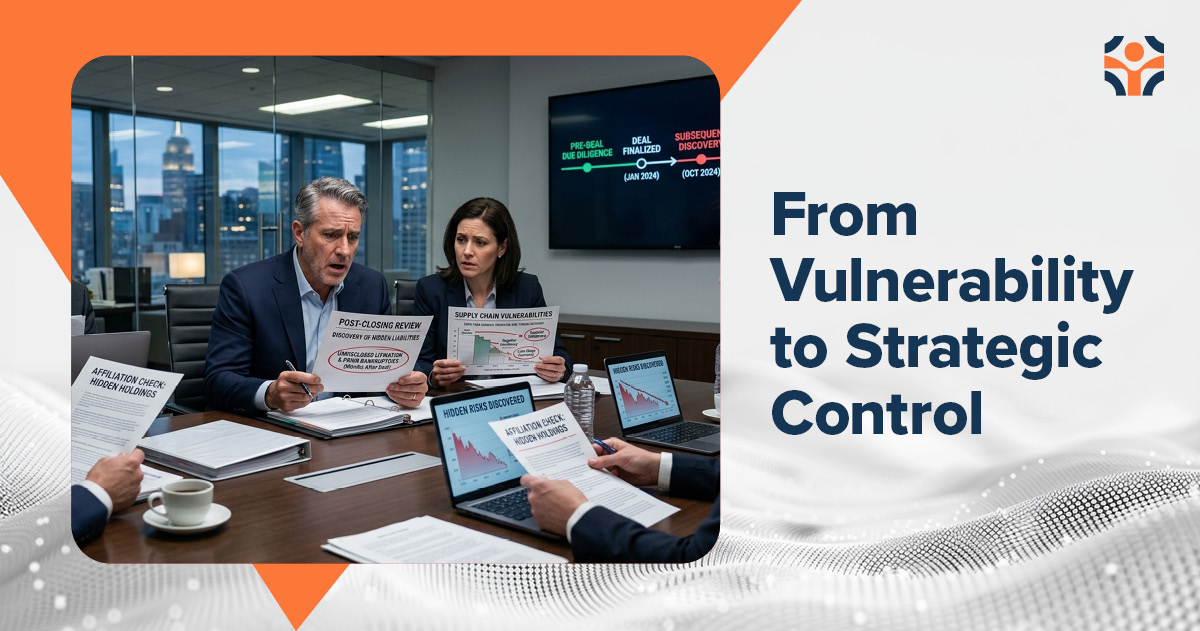
From Vulnerability to Strategic Control
When organisations incorporate professional intelligence into their governance process, the shift in capability is significant. Instead of operating reactively, leadership teams gain the ability to anticipate risk and protect strategic initiatives before exposure occurs.
Three critical transformations often follow.
From Reaction to Foresight
Businesses frequently discover problems only after they have already caused damage. Hidden affiliations, undisclosed litigation, or supply chain vulnerabilities can emerge months after a deal is finalised.
Strategic intelligence identifies these risks early, allowing leadership teams to adjust course before financial or reputational consequences arise.
From Compliance to Genuine Protection
Traditional due diligence processes often focus on regulatory compliance. They verify identities, confirm credentials, and ensure that formal requirements are met.
While important, compliance alone does not guarantee protection.
Strategic intelligence extends beyond compliance by examining deeper networks of influence, ownership structures, behavioural patterns, and reputational indicators that may affect the long term success of a partnership or investment.
From Uncertainty to Strategic Confidence
Every major business decision involves an element of uncertainty. However, uncertainty can be significantly reduced when leadership has access to well researched, independently verified intelligence.
With the right insight in hand, executives can approach negotiations, boardroom discussions, and investment decisions with greater clarity and confidence.
Intelligence as a Leadership Advantage
In today’s global business environment, reputations are built over decades yet can be damaged in moments. Corporate decisions unfold across complex networks of partners, suppliers, investors, and digital audiences.
This complexity demands a deeper level of awareness.
Strategic intelligence equips business leaders with the perspective required to understand not only what is visible, but also what may be hidden beneath the surface. It reveals the relationships, motivations, and patterns that influence commercial outcomes.
For organisations operating in competitive or highly regulated sectors, this awareness becomes a powerful strategic advantage.
Rather than relying solely on internal data or automated verification tools, leadership gains a broader view of the environment in which their decisions will take effect.

Insight Intel: Turning Information into Decisive Action
At Insight Intel, our role is to transform fragmented open source information into clear, verifiable intelligence that business leaders can rely on.
Our investigative methodologies combine advanced data analysis with experienced human interpretation to uncover risks that traditional background checks often miss. Whether evaluating senior leadership candidates, analysing partnership networks, or investigating complex ownership structures, our objective is always the same.
We provide the insight required for confident decision making.
For business owners and executives facing high stakes choices, intelligence is more than an investigative service. It is a strategic tool that strengthens governance, protects brand value, and supports responsible growth.
When the next major decision approaches, the question is no longer simply whether information is available.
The real question is whether you have the insight required to act with certainty.