
The “Quick Idea” Trap: Why Registering a Business Is Only Step One
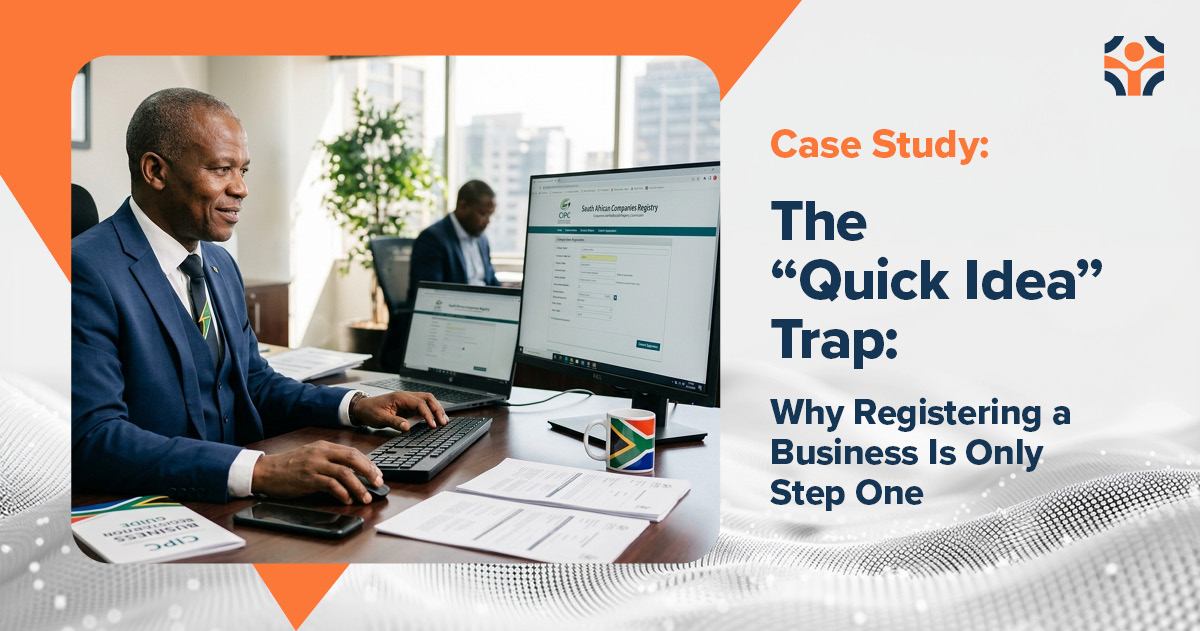
For many founders, the journey begins with momentum. You have a strong concept, a potential market, and the drive to act. Naturally, the first milestone is registering a business. Whether that means filing with the CIPC in South Africa, setting up an LLC in the United States, or completing incorporation in Ireland or Sweden, the moment carries weight. It feels official. It feels like progress. But here is the uncomfortable truth. That certificate only confirms that your business exists legally. It says nothing about whether your idea is viable, your partners are reliable, or your operating environment is safe. When people search for how to start a business, most guidance focuses on compliance, documentation, and structure. These are important, but they are only the visible layer. Beneath that surface sits a more complex reality, one where unseen risks can quietly undermine even the most promising venture. A business can be perfectly registered and fundamentally flawed at the same time.
The “Quick Idea” Trap: Why Registering a Business Is Only Step One
For many founders, the journey begins with momentum. You have a strong concept, a potential market, and the drive to act. Naturally, the first milestone is registering a business. Whether that means filing with the CIPC in South Africa, setting up an LLC in the United States, or completing incorporation in Ireland or Sweden, the moment carries weight. It feels official. It feels like progress. But here is the uncomfortable truth. That certificate only confirms that your business exists legally. It says nothing about whether your idea is viable, your partners are reliable, or your operating environment is safe. When people search for how to start a business, most guidance focuses on compliance, documentation, and structure. These are important, but they are only the visible layer. Beneath that surface sits a more complex reality, one where unseen risks can quietly undermine even the most promising venture. A business can be perfectly registered and fundamentally flawed at the same time.
Beyond the Handshake: Rethinking How to Start a Partnership
Partnerships are often built on instinct. A shared vision, a mutual contact, or a sense of trust can feel like enough. This is especially true in early-stage ventures where speed and optimism tend to outweigh caution.
However, understanding how to start a partnership properly requires more than alignment on paper. When you bring someone into your business, you are tying your financial future and your reputation to their history, decisions, and networks.
This is where many founders take unnecessary risks.
A standard background check might confirm identity, qualifications, or directorships. But it rarely uncovers the deeper story. Past business failures, undisclosed conflicts, or indirect links to problematic entities often sit just beyond the reach of conventional searches.
The real risk lies in what is not immediately visible.
At Insight Intel, this is where investigative depth becomes critical. By analysing networks, historical patterns, and indirect associations, it becomes possible to see the broader picture. A partner is not just an individual, but a node in a wider ecosystem of relationships and decisions.
Protecting your brand starts before your business even begins. If your partner carries hidden risks, those risks will not remain hidden for long. They will surface in operations, in financial strain, or in reputational damage.
The Overlooked Step: Checking a Business Location Properly
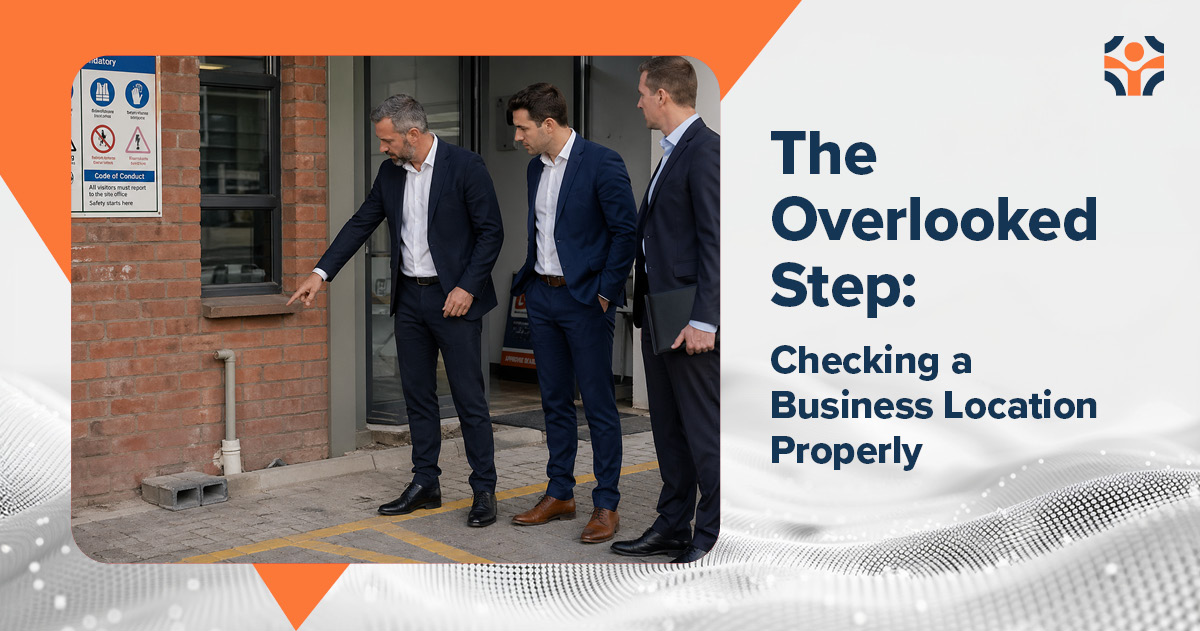
Location decisions are often driven by opportunity. A good deal on a lease, proximity to customers, or a promising development can make a site seem ideal. Yet checking a business location requires more than evaluating foot traffic or rental costs.
Every location carries its own set of variables. Regulatory constraints, zoning issues, infrastructure limitations, and even local economic conditions can influence whether your business can operate effectively.
What appears to be a strategic advantage can quickly become a constraint.
For example, a site may be affordable because it has underlying issues such as compliance restrictions, poor service delivery, or historical disputes. Without proper investigation, these factors only become visible after commitments have been made and capital has been spent.
A structured approach to checking a business location involves asking the right questions early. Is the property compliant with your intended use? Are there any legal or environmental risks attached to it? Does the surrounding area support your long-term growth, or does it introduce operational friction?
Skipping this step is like building on uncertain ground. Everything may look stable at first, but pressure reveals the cracks.
The Reality Check: Why a Business Viability Audit Matters
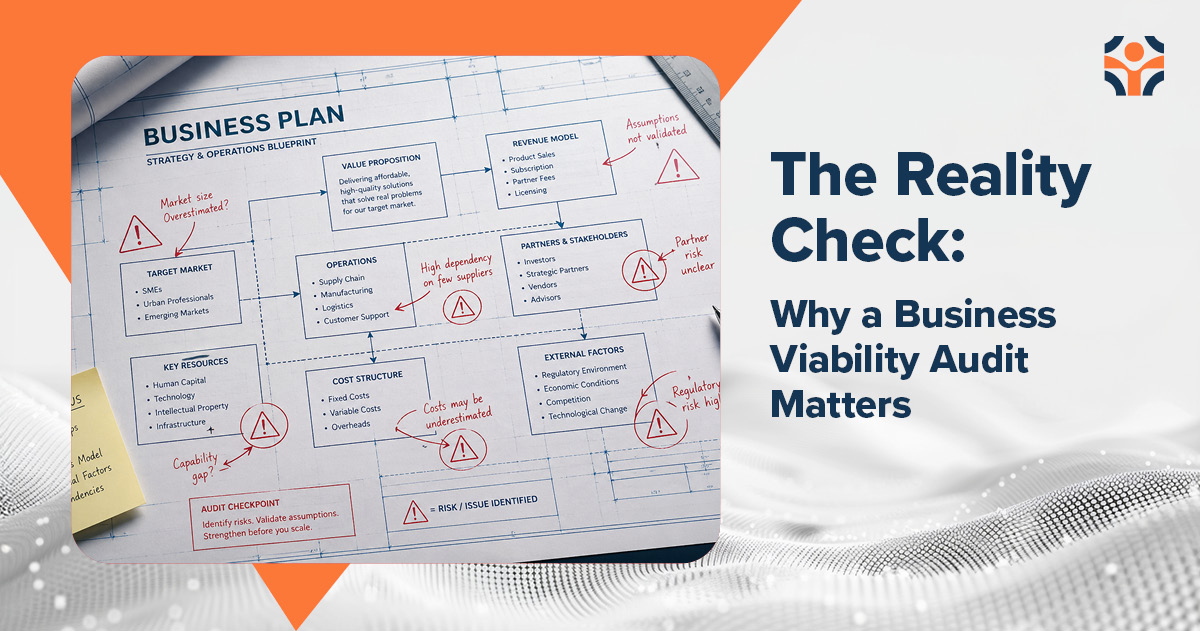
Before committing resources, founders need clarity. This is where a business viability audit becomes essential. It acts as a structured checkpoint, designed to identify weaknesses before they become expensive problems.
A proper audit does not just validate the idea. It challenges it.
At Insight Intel, a Phase 1 audit focuses on uncovering what we refer to as fatal flaws. These are the issues that have the potential to derail a business entirely if left unaddressed.
This process typically includes:
- Assessing the credibility and risk profile of partners and stakeholders
- Evaluating the chosen location for hidden operational or regulatory risks
- Identifying gaps in the business model or assumptions
- Analysing external factors that could impact sustainability
- Highlighting dependencies that create vulnerability
The goal is not to discourage founders, but to equip them with a realistic understanding of what lies ahead. A business viability audit transforms uncertainty into actionable insight.
Instead of moving forward based on optimism alone, you move forward with evidence.
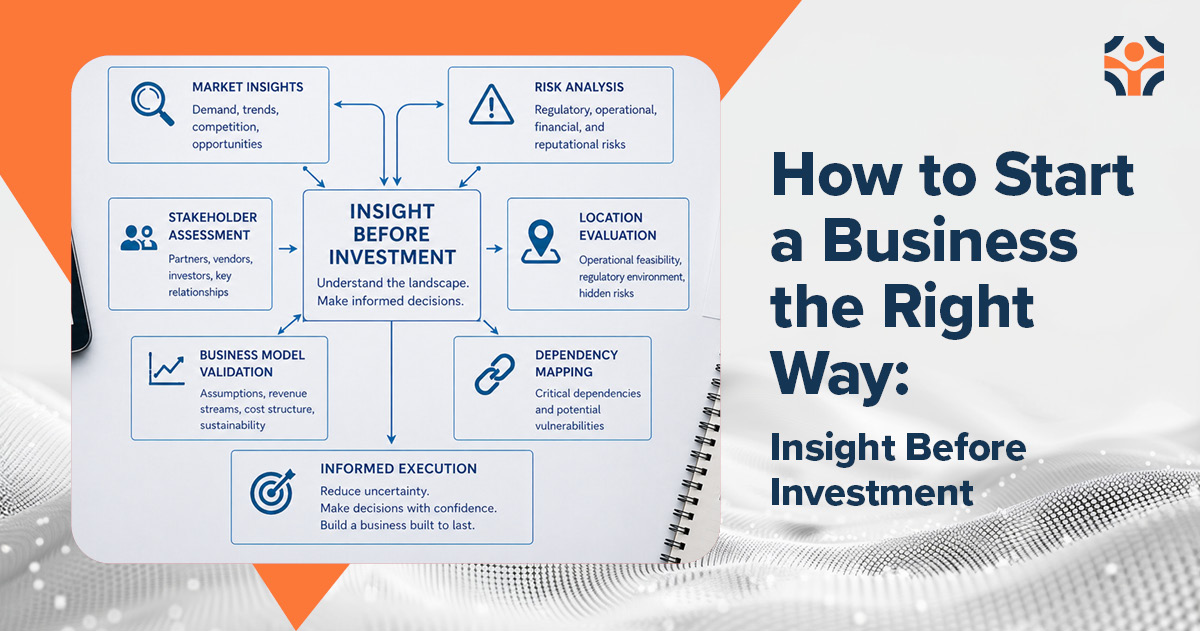
How to Start a Business the Right Way: Insight Before Investment
When founders search for how to start a business, they are often presented with checklists. Register your company. Open a bank account. Secure funding. Find a location. Build a team.
These steps are necessary, but they are not sufficient.
Starting a business is not just about execution. It is about informed execution.
Insight Intel approaches this process differently. Rather than focusing solely on what needs to be done, we focus on what needs to be understood. By conducting targeted investigations and audits, we remove uncertainty from the equation.
This allows founders to make decisions with confidence.
Instead of asking, “What should I do next?” the question becomes, “What risks am I carrying, and are they acceptable?”
The outcome is a clear Go or No Go recommendation, backed by evidence.

Build on Certainty, Not Assumption
Launching a business without proper due diligence is a bit like buying a second-hand car without opening the bonnet. It may run smoothly at first, but hidden issues tend to reveal themselves when it matters most.
The early stages of a business are where the foundation is set. Every decision, from registering a business to forming partnerships and selecting a location, shapes the trajectory that follows.
By investing in insight at the beginning, founders protect more than just capital. They protect time, reputation, and future opportunity.
If you are serious about how to start a business, the smartest move is not just to act quickly. It is to act with clarity.
Because in business, what you do not see can cost you the most.