
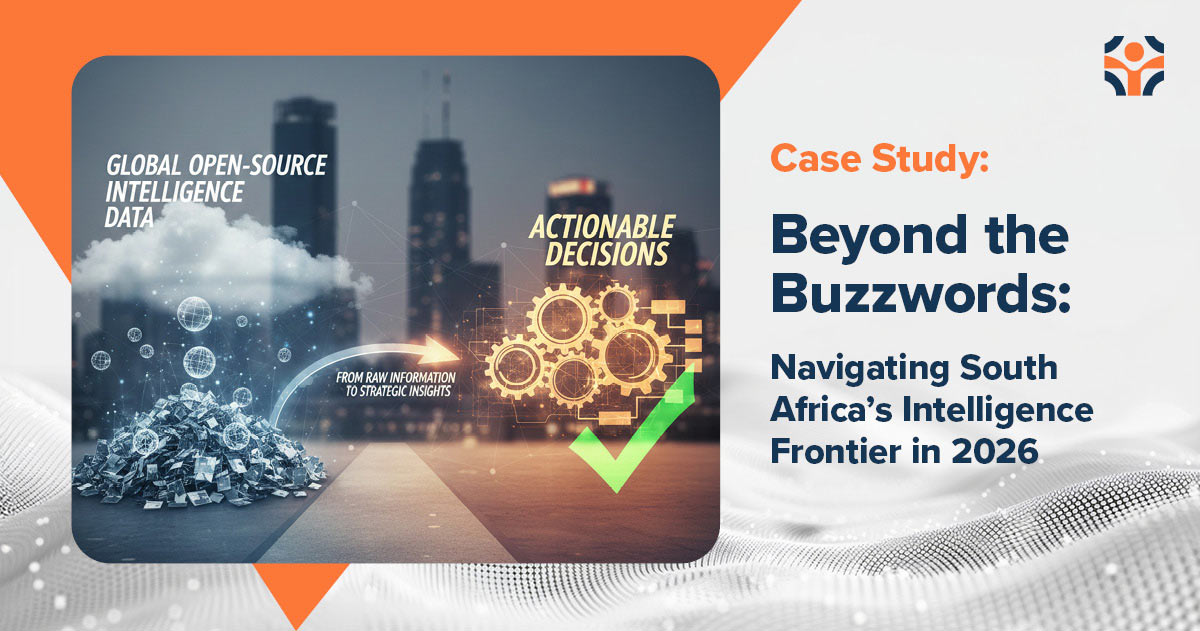
Beyond the Buzzwords: Navigating South Africa’s Intelligence Frontier in 2026
South African businesses have moved beyond the early hype of artificial intelligence and data driven decision making. In 2026, the focus has shifted toward disciplined intelligence that supports real execution. As the local operating environment grows more complex, organisations are demanding insight that goes deeper than standard background checks, uncovering hidden risks across leadership, partnerships, and supply chains before costly mistakes occur.
Beyond the Buzzwords: Navigating South Africa’s Intelligence Frontier in 2026
South African businesses have moved beyond the early hype of artificial intelligence and data driven decision making. In 2026, the focus has shifted toward disciplined intelligence that supports real execution. As the local operating environment grows more complex, organisations are demanding insight that goes deeper than standard background checks, uncovering hidden risks across leadership, partnerships, and supply chains before costly mistakes occur.
Beyond the Buzzwords: Navigating South Africa’s Intelligence Frontier in 2026
If you have spent any meaningful time in a South African boardroom recently, you may have noticed a subtle but important shift in the room. The wide eyed panic of 2024, when every second conversation revolved around “what even is AI?”, has faded. In its place is something more measured, more grounded, and far more demanding.
By 2026, local businesses are no longer interested in flashy dashboards or abstract promises of transformation. The question has become refreshingly practical and brutally honest: will this actually prevent a R50 million mistake, or not?
It is a reasonable question. South Africa operates in a rare and complicated leapfrog economy. We boast world class innovation in certain areas while still navigating aging infrastructure and a persistent polycrisis spanning energy, water, logistics, and governance. In this environment, intelligence is not a luxury or a technology trend. It is fast becoming the foundation of how serious decisions are made.
Globally, the open source intelligence market has surged past USD 15.9 billion. What was once the domain of investigators and analysts is now a core business capability. Yet the real story is not just market growth at a compound annual rate of 26.7 percent. The real shift is how intelligence is being applied.
We are moving away from simply collecting information and toward disciplined decision making. In many ways, this shift is overdue.
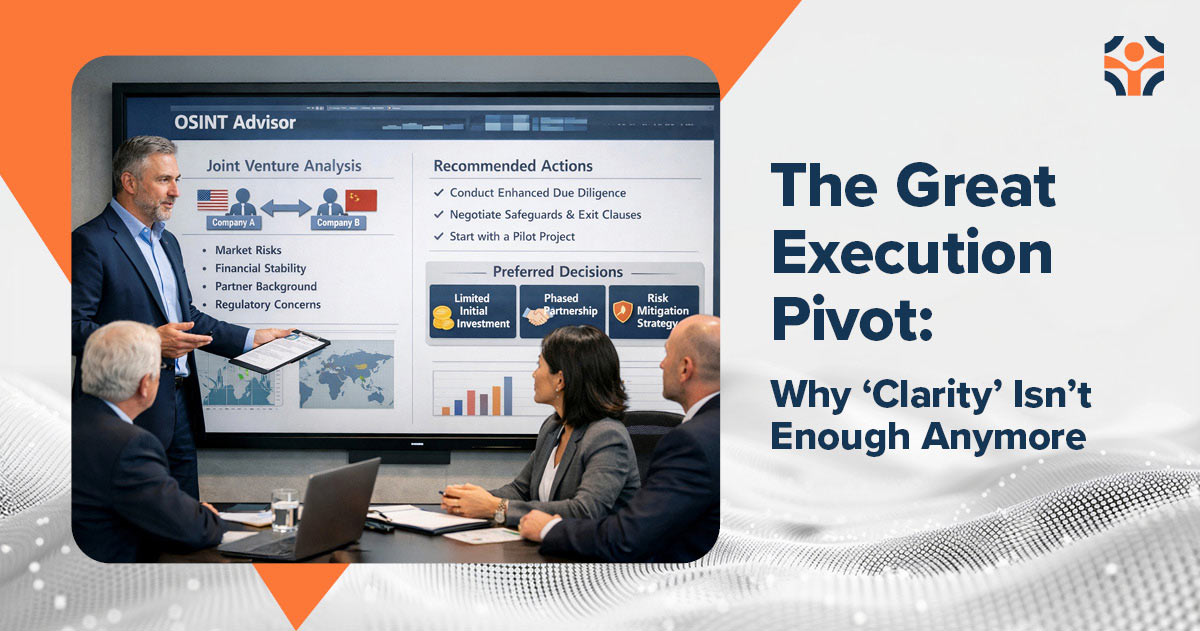
The Great Execution Pivot: Why Clarity Alone Is No Longer Enough
For years, “clarity” was the industry’s favourite promise. Executives were told that intelligence would provide a clear picture of risk. That promise served its purpose, but in 2026 clarity is merely the starting point.
A clear view of a looming problem is useful only if it is paired with direction. If a leader can see the collision ahead but has no guidance on how to change course, the value of that clarity quickly diminishes.
South Africa’s most experienced business leaders tend to share a healthy scepticism of digital noise. They are not impressed by volume for the sake of it. They want evidence, context, and a direct line to execution. A forty page report on online sentiment means very little compared to a concise assessment of whether a potential partner has a documented pattern of unethical behaviour hidden in obscure online networks.
This is where the role of the strategic advisor has emerged. The traditional three tier security operations model has largely been replaced by smaller, more agile teams supported by AI co pilots. These systems handle the repetitive and time intensive data collection, allowing human specialists to focus on interpretation and judgement.
At Insight Intel, this distinction is central to how we operate. Data is widely accessible. Anyone with the right tools and enough time can collect it. Real value lies in experienced analysis, contextual understanding, and informed oversight that turns raw information into decisions that protect the business.
The Battle of the Entities: Technology Focused Versus Strategy Led
To understand where Insight Intel fits, it helps to look at the broader landscape. South Africa has several highly capable intelligence and investigative firms, each with clear strengths, but also with defined limitations.
Consider Entity 1, the classic investigator archetype. Their real time monitoring environments and custom built data mining tools are impressive. In the midst of litigation, regulatory action, or criminal investigation, they are exceptionally effective. Their work is precise and tactical. However, their strength lies in response rather than prevention. They identify issues once they have already surfaced. Insight Intel operates earlier in the decision cycle. The goal is not only to identify wrongdoing, but to prevent strategic missteps before they become expensive lessons.
Entity 2 represents the forensic authority. These teams are technical powerhouses with the ability to recover data from damaged devices and trace complex digital asset movements. When evidence is required, they deliver with precision. Yet evidence alone does not equal foresight. Discovering what exists on a hard drive does not necessarily explain how undisclosed affiliations or reputational risks could undermine a five year expansion strategy. Our role is to interpret those implications before forensic intervention becomes necessary.
Entity 3, the risk partner, blends open source intelligence with physical human intelligence. Their capabilities are invaluable in high risk travel, executive protection, and physical security scenarios. For many corporate leaders, however, that level of intervention is unnecessary when the concern is financial exposure, governance risk, or reputational vulnerability. Insight Intel focuses on uncovering the less visible links within networks, ownership structures, and public behaviour that often pose the greatest long term risk.
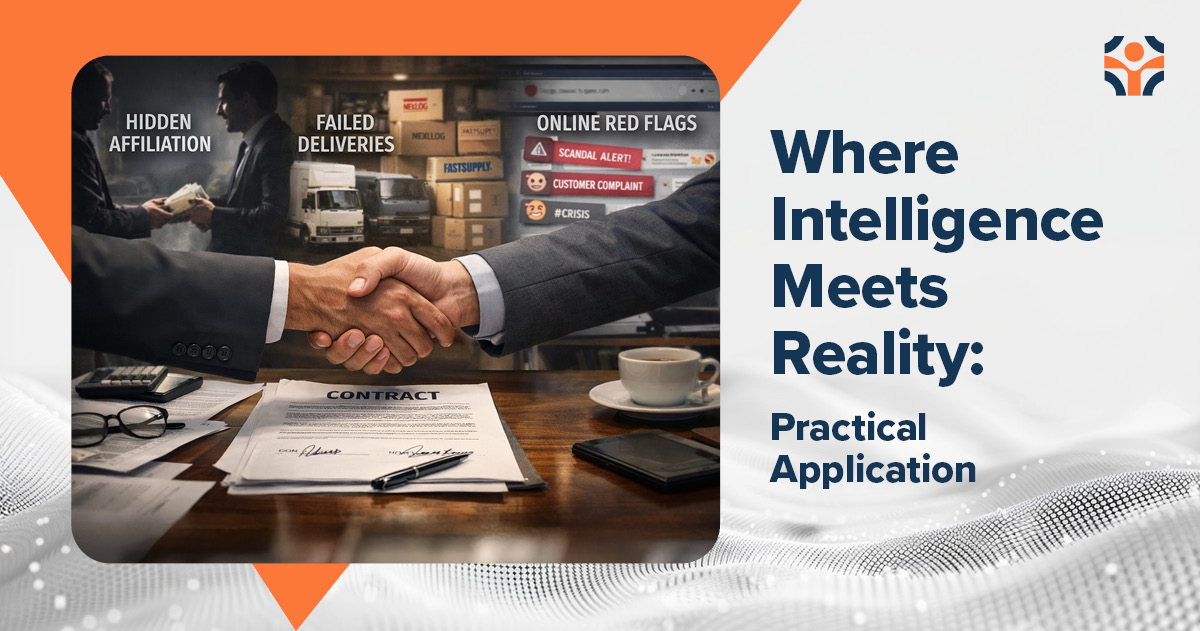
Where Intelligence Meets Reality: Practical Application
One of the most damaging patterns in corporate decision making is what many refer to as Contract Signed Syndrome. The pressure to close a deal, secure a candidate, or onboard a vendor can lead to rushed decisions and incomplete scrutiny.
Traditional background checks serve a purpose, but they are transactional by nature. They confirm credentials and surface obvious red flags, yet they rarely reveal networks, influence, or patterns of behaviour.
Our work is designed to go deeper.
In executive due diligence, we identify affiliations and activities that do not appear on a CV but may significantly impact leadership credibility or stakeholder trust.
In supply chain vetting, we uncover hidden risk factors such as repeated delivery failures, shell structures, or reputational issues concealed behind rebranding and layered ownership.
In reputational defence, we monitor behavioural patterns and emerging narratives before they escalate into public crises.
The shift is from compliance driven checks to value protection. For recruitment firms placing senior talent, or for marketing teams safeguarding brand equity, intelligence must extend beyond surface level assurance. It must reveal what is currently invisible.
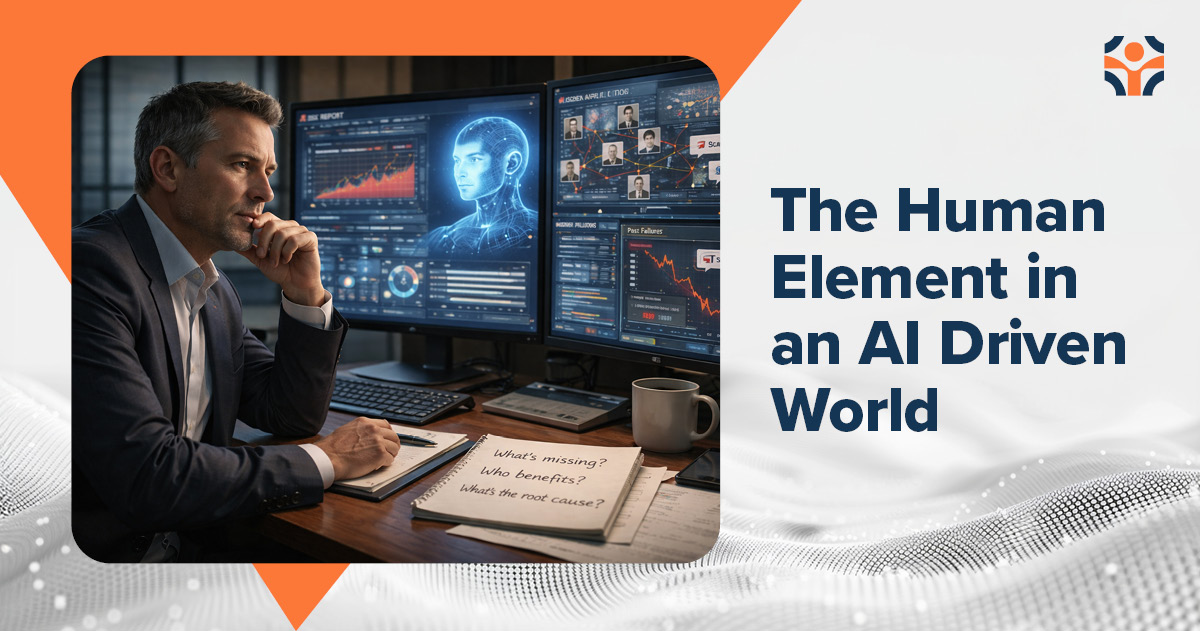
The Human Element in an AI Driven World
Artificial intelligence has undeniably reshaped intelligence work. It accelerates discovery and highlights patterns at scale. Yet recent experience in South Africa has reinforced a crucial lesson. AI can be impressively confident while being completely wrong.
Algorithms do not understand local nuance, informal power structures, or the unspoken dynamics of South African business culture. They cannot interpret political undercurrents or contextualise reputational signals with the subtlety that experience provides.
The strategic advisor of 2026 combines computational efficiency with human judgement. AI narrows the field. Human expertise makes the call. This balance protects against deskilling and preserves the ability to ask the right questions, which in intelligence work often matters more than the answers themselves.
At its core, this approach builds operational resilience. It enables organisations to avoid crises rather than simply respond to them. It supports decisions that are informed, deliberate, and forward thinking.
The Bottom Line
As 2026 kicks into business gear, South Africa’s business environment will only grow more complex. The risks are tangible, but so are the opportunities for organisations that approach intelligence with discipline and intent.
It is worth asking when you last looked beyond a standard check before making a major decision. Are you relying on information alone, or are you equipped to act on it with confidence?
The era of simply knowing is behind us. The advantage now lies in knowing what to do next.
If your organisation is making decisions that carry financial, reputational, or strategic risk, now is the time to reassess how deeply you are looking. Insight Intel helps business leaders, recruitment professionals, and growth focused teams uncover risks that traditional checks miss. Through disciplined open source intelligence and human led analysis, we provide the insight needed to act with confidence before commitments are made. When the stakes are high, informed foresight is not optional, it is essential.